Astigmatism is a common and treatable imperfection in the curvature of the eye that causes blurred vision at distance and near. It is a vision defect that occurs when the cornea – the transparent area at the front of the eye’s surface – is curved irregularly.  Normally the cornea follows a regular curve and refracts the light entering the eye equally at every point. In astigmatism the cornea is shaped more like a rugby ball than a soccer ball. If light enters through such a cornea, the part of the light that is refracted due to the more curved surface is focused before the other part of the light that passes through the less curved surface. This causes blurred vision at all distances. It can occur in combination with myopia or hyperopia. It is possible to treat astigmatism in various ways: from glasses and contact lenses to laser surgery.
Astigmatism has an effect on your vision similar to that of looking into a wavy mirror. The eye is therefore unable to unite the light rays at one point. The symptoms of astigmatism can be very different depending on the entity. In mild cases, there may even be no symptoms.  The main symptoms are:
Astigmatism is generally due to an irregular curvature of the cornea or lens. It can be hereditary or caused by other factors. In fact, astigmatism can also occur in the initial and intermediate phases of cataracts or following metabolic alterations (such as diabetes) which cause the alteration of the refractive index of the lens. Astigmatism can also be induced by cataract surgery done with less advanced techniques.
Usually, astigmatism is stable over time. When astigmatism increases with age it can be a sign of certain eye diseases. In these cases, it is necessary to perform a test called corneal topography to exclude the presence of corneal diseases such as keratoconus. However, some behaviors can cause an increase in astigmatism. Among the behaviors that can create a progressive deformation of the cornea, there are continuous rubbing of the eyes, sleeping on your stomach or on your side. The increase in astigmatism can also be caused by other factors, such as atopic dermatitis and blepharitis which alter the health of the eyelids. If the increase in astigmatism occurs after the age of 60, the cause could also be the onset of cataracts.
To understand if you suffer from astigmatism, a diagnosis from an ophthalmologist is necessary. In any case, it is possible to carry out a simple test to understand if there is the possibility of being astigmatic. Try looking at this “star” with one eye at a time. If the lines all appear equally clear and marked, you are not astigmatic. If there are differences in one or more directions, astigmatism is present. 
Short-sighted people see poorly from afar but well up close. This is because the images are focused in front of the retina instead of on it due to an eye that is too long or a cornea that is too curved. Astigmatics, on the other hand, see poorly both from a distance and up close. In this case, the images are focused on two different planes (in front of or behind the retina instead of on it). The cause is usually an irregularly curved eye or cornea.
We hear about various techniques as a natural cure for astigmatism without the need for surgery or glasses. One of these techniques is orthokeratology. This practice involves the use of “special” contact lenses during the night which make you see well the following morning, simply by removing them. In reality, these lenses do nothing but deform the cornea, flattening it during the night, so that you can see better in the morning. This induced deformation risks ruining the cornea. Other techniques involve visual exercises that consist of staring at distant objects without glasses in order to force the eye to see well. Unfortunately there is no scientific evidence to prove their effectiveness. On the contrary, the effort of those suffering from astigmatism risks tiring the eye, causing burning and headaches.
Today it is possible to correct astigmatism with the use of glasses or contact lenses. For people with astigmatism who want to remove their glasses and contact lenses, however, there is laser surgery . 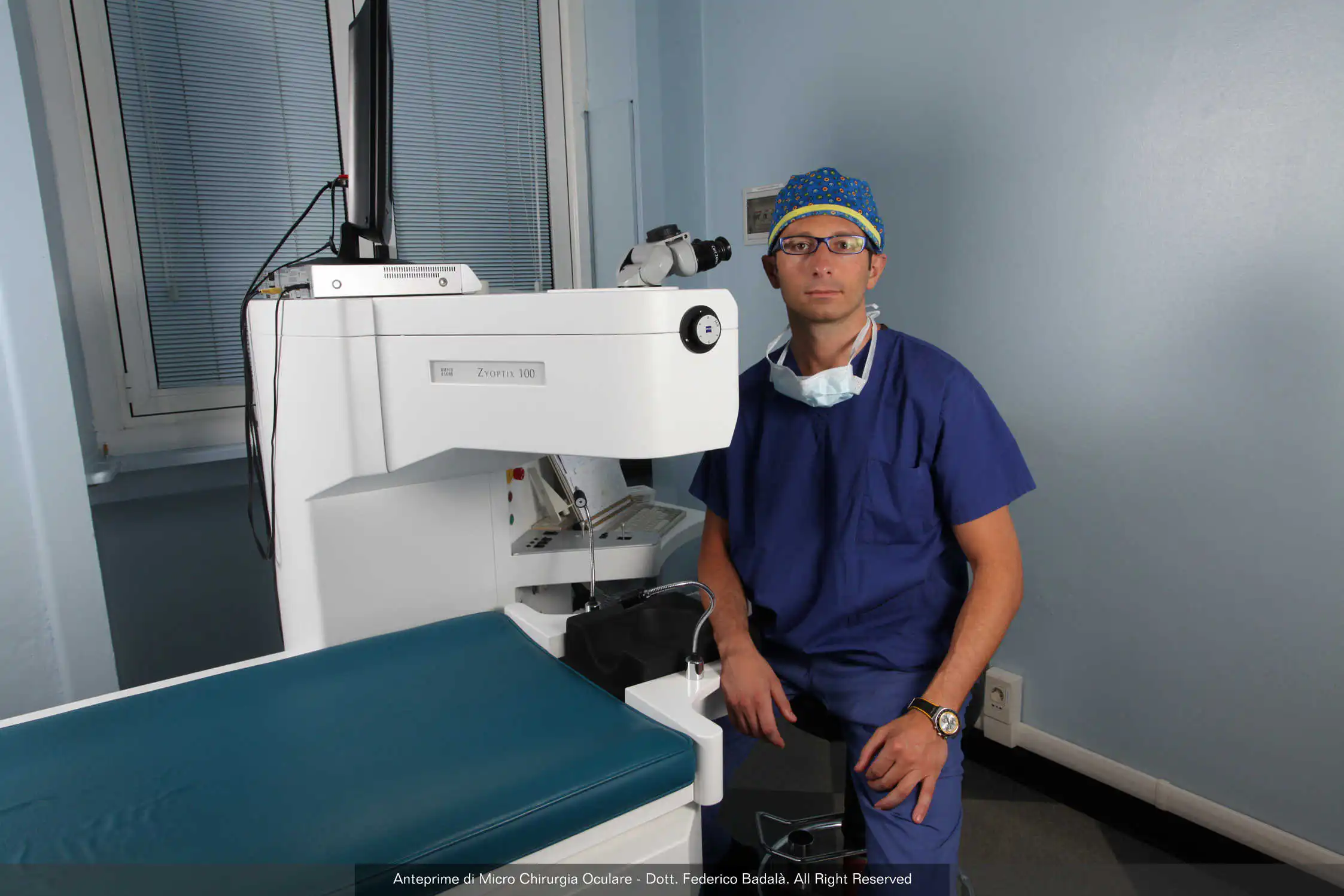 We are talking about laser refractive surgery that can be performed with different techniques:
The minimum conditions for laser eye surgery is 18-20 years. However, astigmatism must be stable for at least 2 years, otherwise it may return after the operation, making retreatment necessary. Over the age of 45 , other interventions can also be considered to correct astigmatism: Phacorefractive surgery which consists in replacing the crystalline lens with an intraocular lens that allows you to see well from far away and up close without glasses. After the age of 60 it is usually no longer recommended to perform laser surgery for astigmatism because often there are already opacities in the lens – or they could appear within a short time – and this could cause the astigmatism to return. In this case, it is advisable to perform the Phacorefractive surgery, suitable for correcting astigmatism and myopia. Depending on the type of intraocular lens used, you may or may not need to use glasses for near reading. Laser surgery can be performed on both eyes. In the case of correction of astigmatism by implanting phakic intraocular lenses or phacorefractive, it is usually possible to operate on both eyes a couple of days apart.  In cases of severe astigmatism, intraocular contact lenses – also called phakic lenses – can be implanted inside the eye with the advantage of having very fast vision recovery. The latest innovation for treating astigmatism is the High Tech intraocular lens customizable with light resulting from the studies of Nobel Prize winner Grubbs. During the phacoemulsification surgery, a High Tech lens is introduced in place of the natural crystalline lens. The lens can be customized using a light beam on an outpatient basis. This method has the advantage of being able to correct high degrees of astigmatism but also of myopia, hyperopia and presbyopia.
The cost of the operation to correct astigmatism varies from 1,500 to 4,800 euros per eye. The price varies depending on the type of technique that is used. The choice of technique is determined by several factors such as the degree of astigmatism, the coexistence of myopia or presbyopia, the age of the patient and the characteristics of the eye.  Laser surgery (PRK, FemtoLASIK, SMILE, Curved Keratotomy with Femtolaser) is less invasive and less expensive than the implantation of intraocular lenses. The cost of the surgery varies from 1,500 euros to 2,500 euros per eye. Phakic intraocular lens implantation and phacorefractive surgery with intraocular lens implantation are reserved for patients with higher astigmatism. In this case, the cost varies from 3,300 to 4,800 euros per eye depending on the characteristics of the lens that is implanted. Lenses for astigmatism are called Toric lenses.
Laser surgery for astigmatism in agreement can be performed with the main insurance companies, supplementary funds and health funds. Some insurances provide direct payment of the medical service without any cost to the patient, others provide indirect assistance. In this case the patient will receive a refund after presentation of the invoices for the services received. Each insurance has its own tariff, prices and reimbursements. Read the list of affiliated insurance companies here. Laser surgery for astigmatism can no longer be performed through the National Health Service (SSN) or ASL (Local Health Authority). Laser astigmatism surgery has been done through ASL in past years but today with spending reduction policies this is no longer possible.
You might also be interested in the following testimonials from Dr Badala's patients:
You might also be interested in the following videos on similar topics: